Architecting for uncertainty - part 5: DevOps defines how a fast-flow organization works
This is the fifth in a series of articles based on my talk Architecting for Fast Flow: Thriving Amid Uncertainty. In this series, I define the term fast flow and explain why it has become an essential software delivery capability. I discuss how fast flow emerges from a socio-technical architecture, which consists of a software architecture and its development organization. Finally, I describe how to design and evolve a socio-technical architecture in order to sustain fast flow.
The articles in the series are:
- Thriving in a VUCA world requires frequent deployment
- Fast flow defined
- GenAI as an amplifier
- Team topologies organizes for fast flow
- DevOps defines how a fast-flow organization works
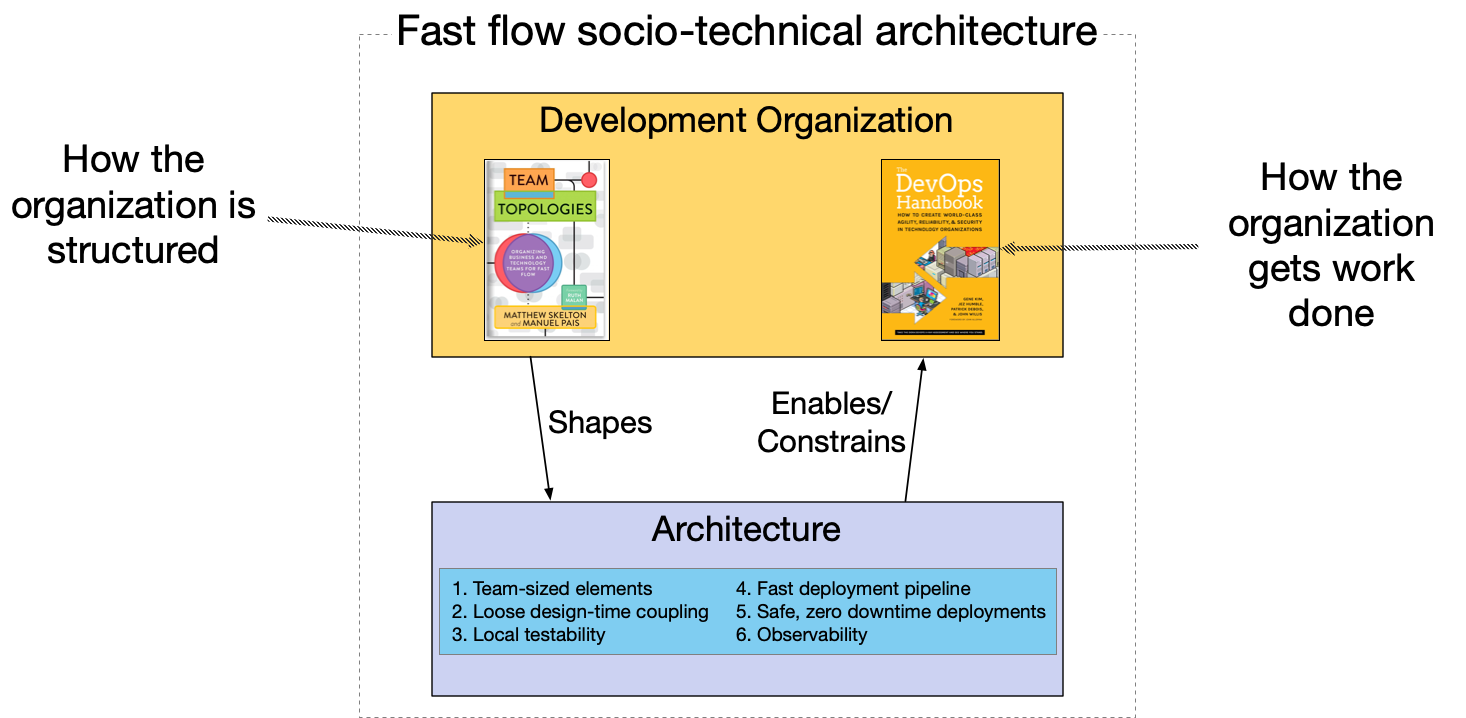
Part 4 explained that fast flow is an emergent property of a socio-technical architecture, and described how Team Topologies structures the development organization for fast flow. In this article, I describe DevOps, which defines how a fast-flow organization gets work done. You will learn about three key DevOps practices: continuous delivery, monitoring production telemetry, and hypothesis-driven development.
Let’s start by discussing what DevOps is and is not.